Review of summer 2026 - "Familial Feeling Blends With Edged Repertoire At Chamber Music Fest" by Keith Powers
By
David YangA great review of summer 2026 from Classical Voice North America


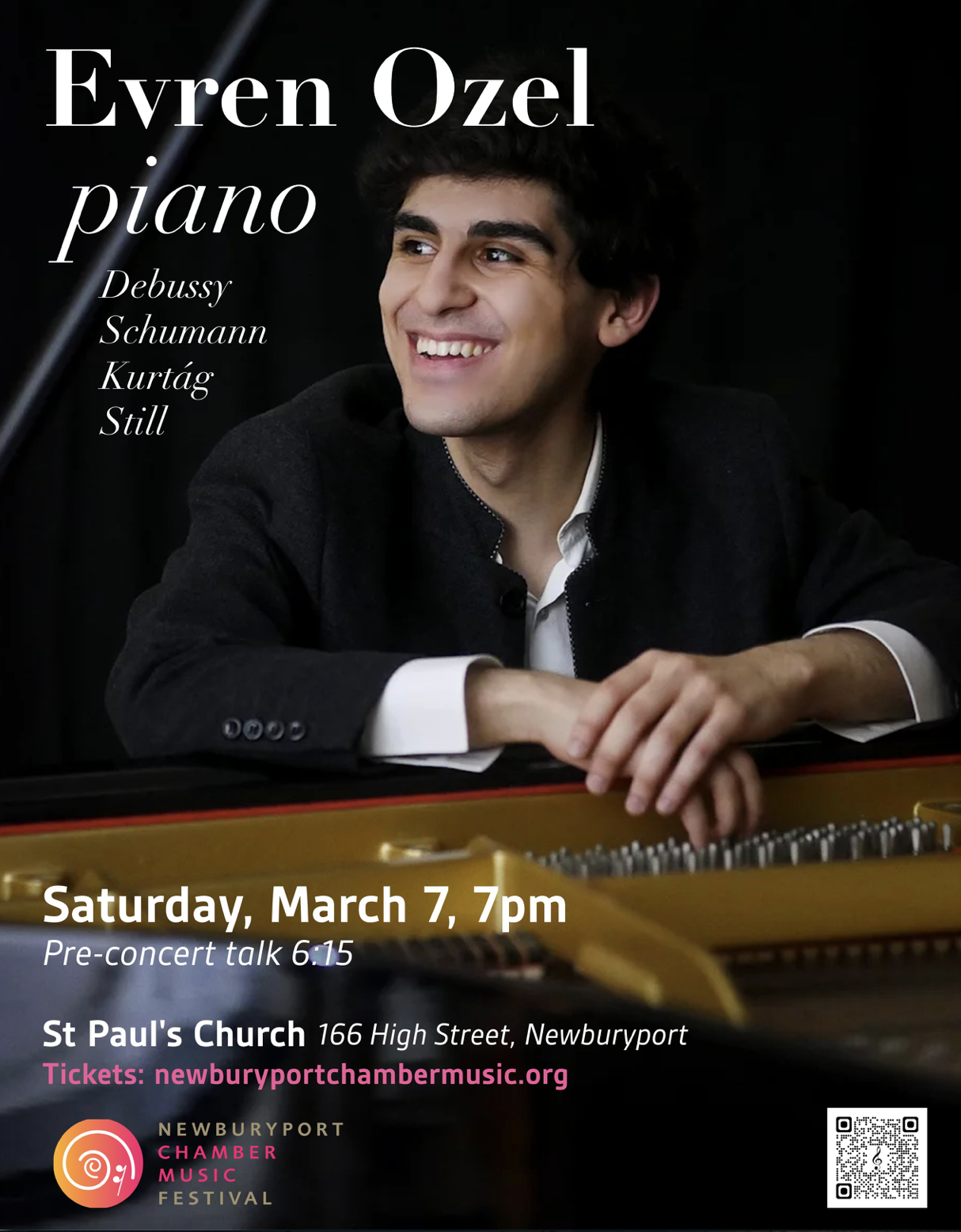
We’re barely two weeks from pianist Evren Ozel’s recital on March 7th at St. Paul’s. I’m not kidding – this kid is going to blow you away. The first half of the concert features compositions by William Grant Still and Debussy. The second half includes Hungarian composer György Kurtág’s Játékok alongside Robert Schumann’s great character work, Carnaval. Kurtág, who reveres Schumann, would be honored to open for him.

To many Catholics, “Carnaval,” known as “Mardi Gras” in New Orleans, is one big party before the forty days of abstinence that follow (Lent, which began last week). This is the atmosphere Schumann captures as he describes a rowdy night on the town with friends, real and imagined. Peter Miyamoto has generously allowed me to reproduce his program notes, which detail the arc of the work in addition to providing a kind of dramatis personae for the characters involved.
David Yang, Artistic Director
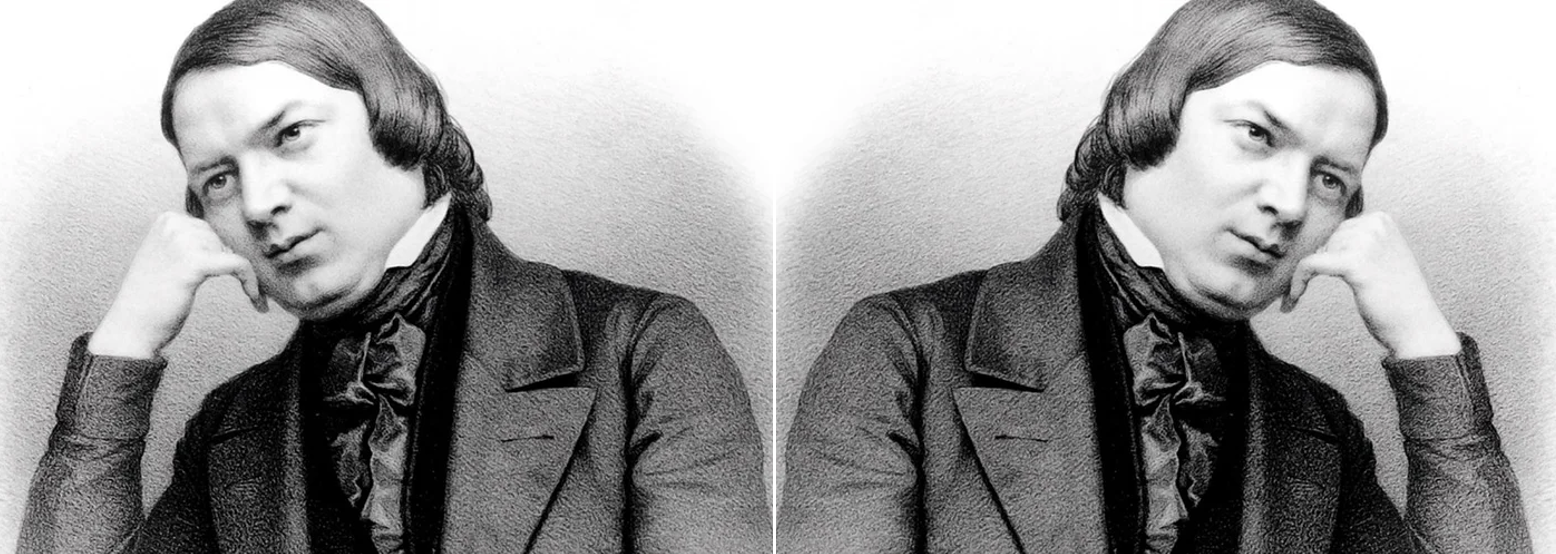
Robert Schumann’s Carnaval Op. 9 (1835)
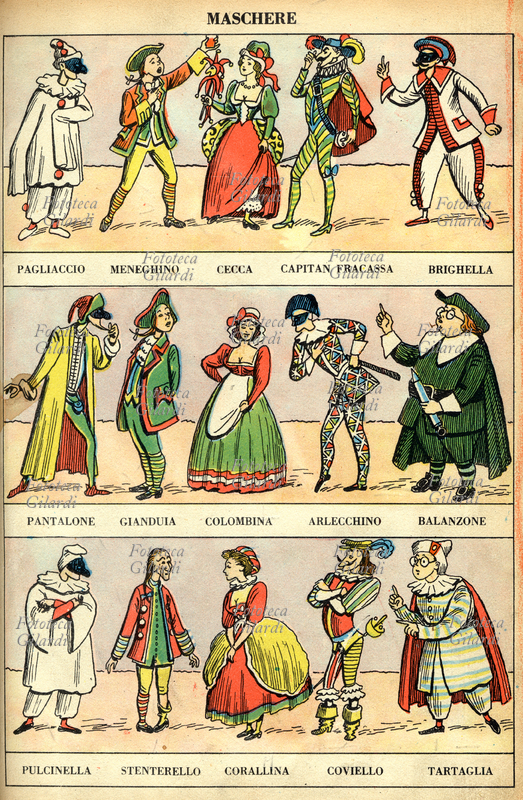
To enter the world of Carnaval is to enter the complex world of Robert Schumann’s psyche. Full of references to 19th Century musical and literary figures, musical depictions of Schumann’s close circle of friends, as well as caricatures of Italian Commedia dell’Arte characters, Carnaval perhaps more than any of Schumann’s other works is a musical encyclopedia of Schumann’s creative mind.
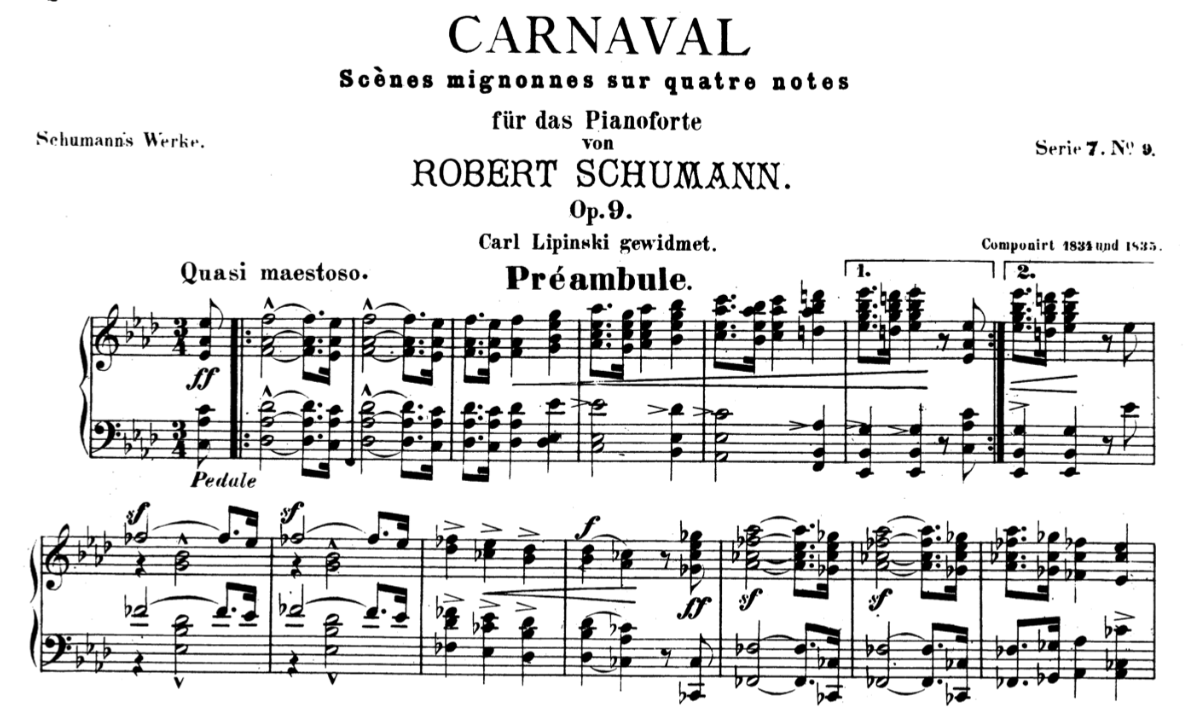
Finished at carnival time in 1835, Carnaval is unified by the two musical motives A(or Ab)-Eb-C-B, and Ab-C-B which occur throughout this piece. Written non-musically, these notes spell Asch, the name of the birthplace of Ernestine von Fricken, then the object of Schumann’s attentions, and also the only letters in Schumann’s name that can be played musically (SCHumAnn).
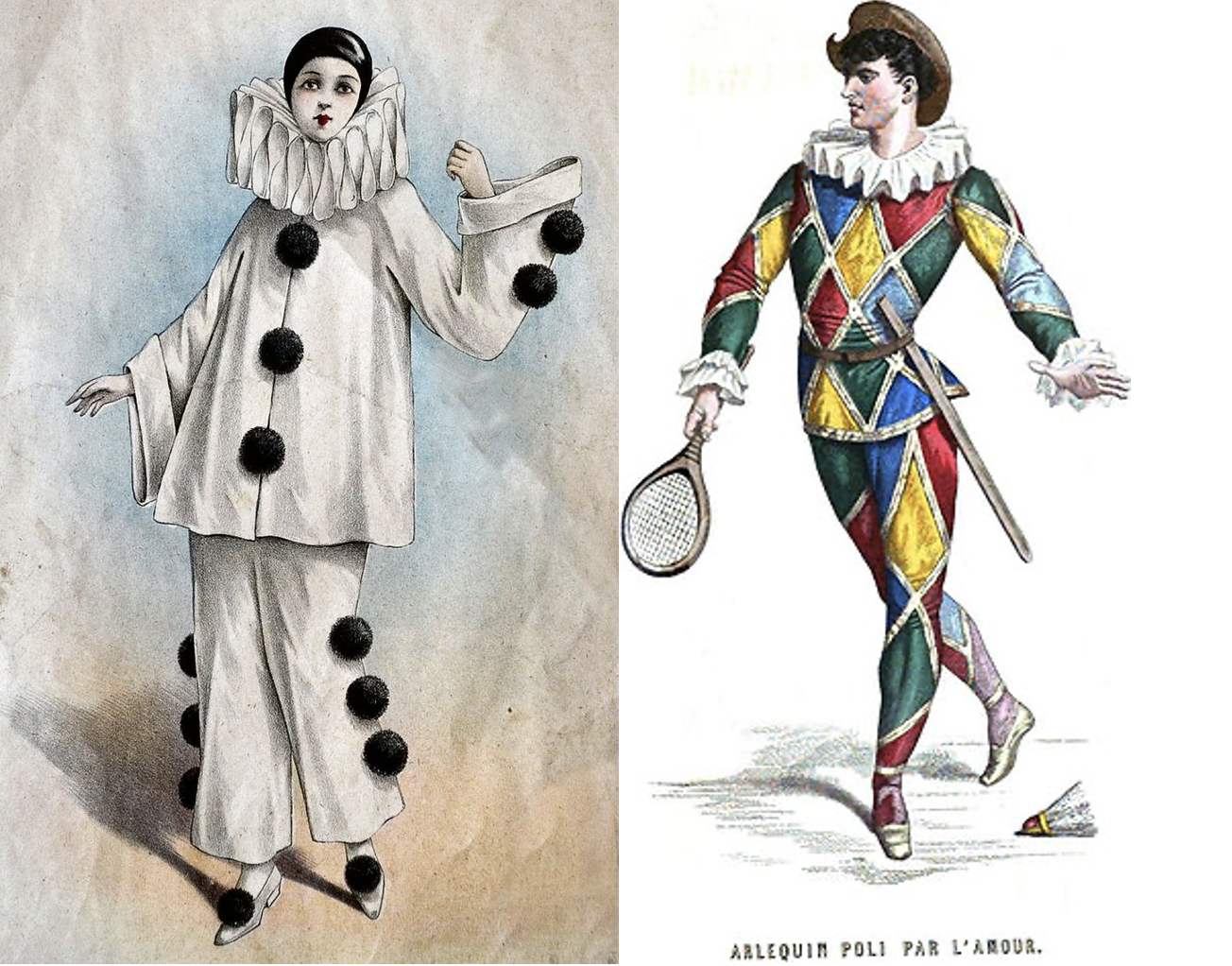
Carnaval begins with a Préambule marked, perhaps with tongue-in cheek, “Quasi maestoso,” or “as if majestically.” This movement serves as an introduction announcing the coming of the carnival, and is followed by two portraits of Commedia dell’Arte clowns Pierrot and Arlequin, Pierrot being the sad-sack clown perpetually shooed away by others, and Arlequin being the jester clown.
Following the Valse Noble (noble waltz), Schumann paints portraits of what he perceived as the dual aspects of his personality, the dreamy Eusebius and the somewhat more impetuous Florestan. Next to appear on the carnival stage is Coquette, the flirtatious dancer fluttering her fans provocatively, then shutting them with a stamp. After Réplique comes the lively Papillons. Papillons is also the name of Schumann’s earlier set of 12 pieces representing a masked ball, a piece that is quoted in the Florestan movement and the concluding movement of Carnaval. In the next piece, ASCH-SCHA, the motif comes to the fore, seemingly dancing in different voices.
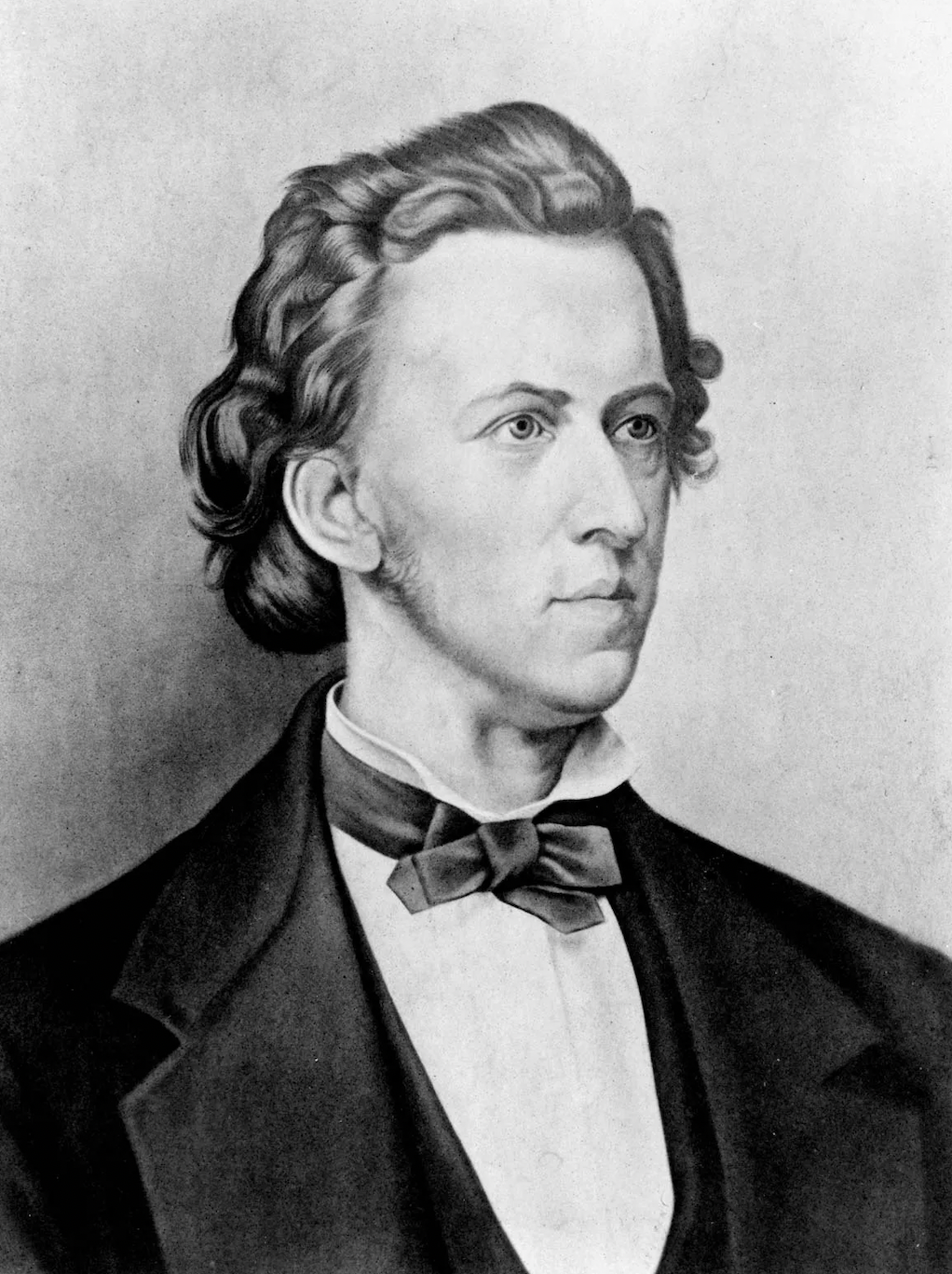
The next pieces are portraits of three important personalities in Schumann’s life. The first, Chiarina, is a fiery portrait of Clara Wieck, later Schumann’s wife, whose performance of Carnaval prompted Liszt to the opinion that it was one of the greatest works he knew. The next describes the composer Chopin, who Schumann praised highly. The last, Estrella, is a portrait of Ernestine von Fricken, then a piano student of Schumann’s future father-in-law, Friedrich Wieck.

Following these portraits are the final representations of scenes from Commedia dell’Arte. Reconnaissance describes a lovers’ tryst, while Pantalone and Colombine caricatures the Venetian merchant Pantalone, and his wife Colombine, who together form the Italian equivalent of Punch and Judy. A tribute to the legendary violinist Paganini is then surrounded by the Valse Allemande. Paganini, of course, had an enormous influence on not just the violinists of the time, but also pianist/composers such as Liszt, Chopin and Schumann.
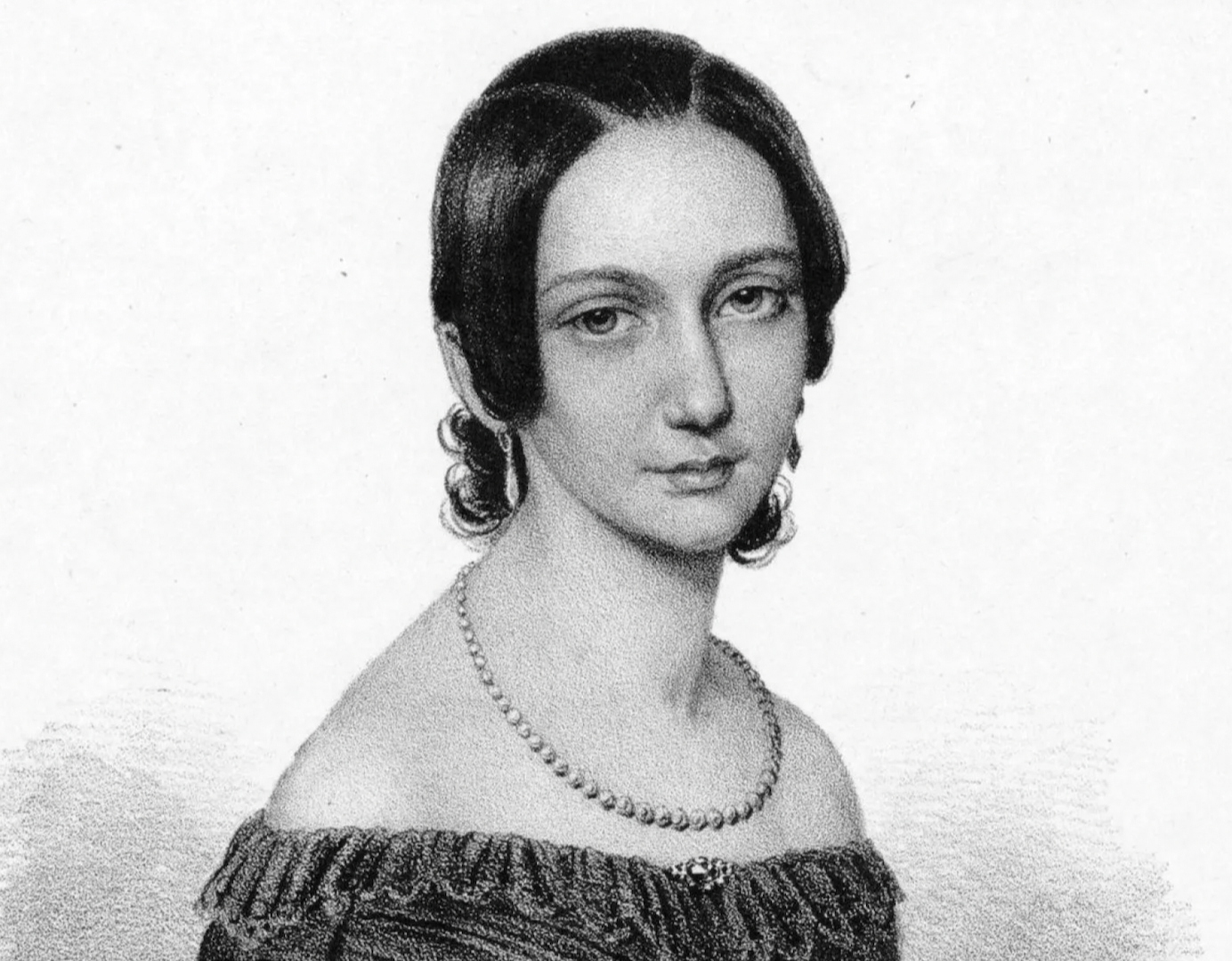
Schumann described the next piece, Aveu (marked “passionato”) as a “confession of love,” and the next piece, Promenade, as a “walk through the ballroom with one’s partner.” Pause, which is an excerpt from the Préambule, leads into the final piece, Marche des Davidsbündler contre les Philistines. The Davidsbund, or League of David, was an imaginary organization created by Schumann to fight the Philistine attitude of complacently accepting the status quo. Schumann took a very real part in this crusade, using his newspaper, the Neue Zeitschrit für Musik, as a forum to attack superficial art, signing the articles with imaginary names of members of the Davidsbund such as Eusebius and Florestan. Beginning as a pompous march in three (again with tongue-in-cheek), the final piece of Carnaval has all the feel of a huge curtain call as it builds to its appropriately brilliant ending.
Notes used with the generous permission of Peter Miyamoto
By
David YangA great review of summer 2026 from Classical Voice North America
By
David YangHere is a list of the music that was performed last night at St. Anna's Chapel
NCMF relies on the assistance of corporations, foundations, and most importantly, you.
Make a GiftVolunteerCorporate Sponsors


